
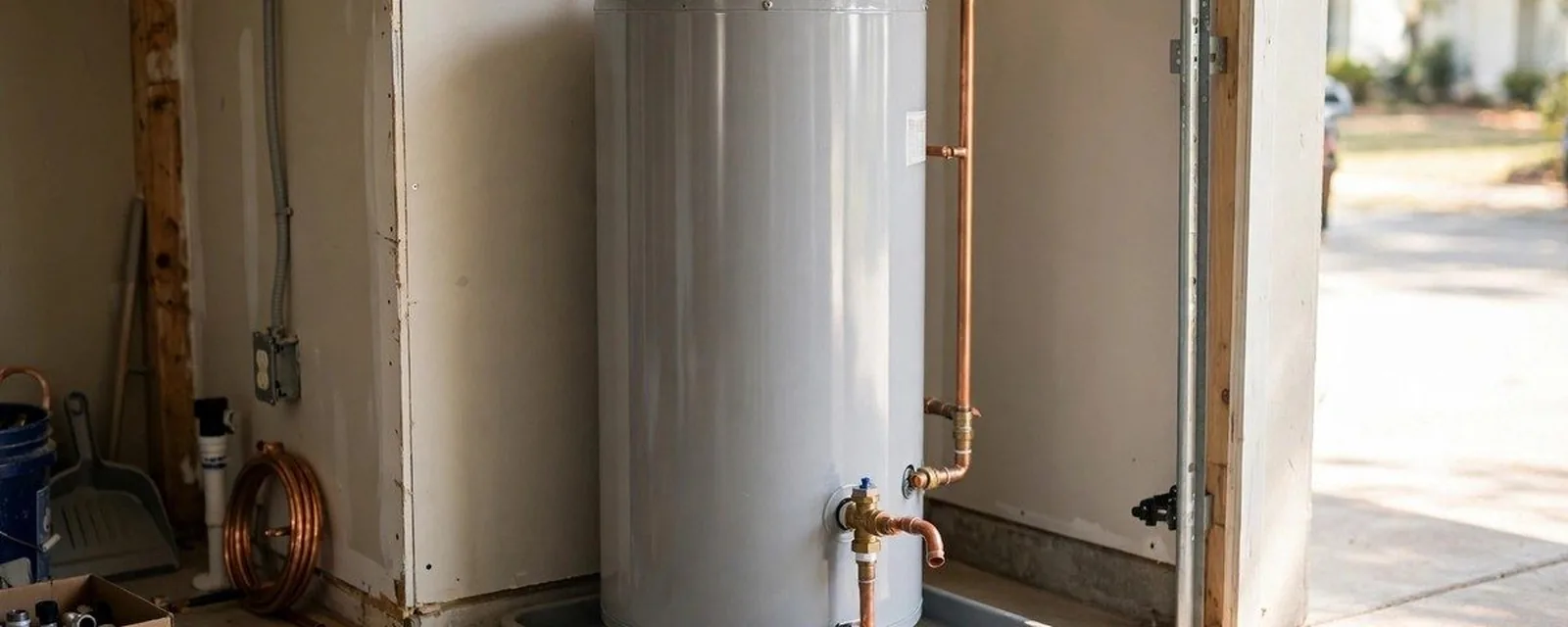
A tank that is leaking from the bottom seam cannot be patched, and a heater that trips the breaker every morning is on borrowed time. If water is pooling, shut the cold supply valve on top of the tank, switch off the gas control or the breaker, and call. We will set up a replacement visit, often the same day when schedules allow.
Most callers do not know whether they need a new tank or a smaller fix. That is a fair question, and the honest answer comes from the age, the leak location and the part that failed, which is why our plumber checks before recommending a swap. A failed element or thermocouple is a water heater repair. A rusted shell is a replacement.
Signs the tank is finished, not just tired
Look at where the water is coming from. Drips at a fitting, valve or the top of the tank can often be repaired, while water seeping from the jacket or the base means the steel liner has failed. Rust-colored hot water, popping noises from sediment, and a heater older than 12 years all push the decision toward replacement.
Do this while you wait
- Close the cold water supply valve above the tank.
- Turn the gas control to pilot or off, or switch off the heater's breaker.
- Open a hot tap upstairs to relieve pressure, and keep kids and pets away from hot water.
- Move stored items out of the leak path and take a few photos for insurance.
What a proper replacement includes
A swap is more than lifting one tank out and another in. The plumber sets the new heater on a drain pan with a drain line, fits a new temperature and pressure relief valve with a full-size discharge pipe, replaces worn supply connectors and checks gas piping or the electrical disconnect. Oregon's plumbing code also expects seismic strapping, so the tank is braced rather than left free standing.
Venting matters as much as plumbing. A gas heater needs a clear draft path with correct clearances, and any change in model or efficiency can change the vent requirement. If your old tank has a thermal expansion tank, we test it, because a waterlogged one lets pressure climb and shortens the life of the new heater.
| Option | Best for | Things to know |
|---|---|---|
| Standard gas tank | Homes already piped for gas | Needs vent and gas connection checked |
| Standard electric tank | Garages and closets without a vent path | Needs the right breaker and wire gauge |
| Heat pump hybrid | Lower running cost where there is room and airflow | Taller unit, needs clearance and a condensate path |
| Tankless | Long-term space savings and endless hot water | Higher up-front cost, may need a bigger gas line |
Tank leaking or no hot water at all?
Call and we will line up a replacement plumber and tell you the price before any work starts.
Why age matters in Happy Valley
Much of the city was built after 2000, so many homes have builder-grade tanks that are now 12 to 15 years old. Those units tend to fail together, often within a couple of winters of each other. The local water is soft, which spares heating elements from heavy scale, but soft water can still wear an anode rod, and a worn rod lets the tank corrode from the inside.
If your heater is in that age window and starts leaking, the repair budget is rarely well spent. Replacing it also gives you a chance to change fuel type or capacity. A family that has grown since the first tank was installed may want 50 gallons instead of 40, or may prefer to talk through tankless conversion while the old unit is out.
How the price is set
You hear a clear price before work starts. The final figure depends on the tank size and efficiency, whether the old unit sits in an attic, garage or crawlspace, the condition of the existing vent and shutoff valves, and whether a permit or code update is part of the job.
A heater that is easy to reach and already meets code costs less to swap than one that needs a new vent run.
Ask us to list any extras separately. A new expansion tank, a drain pan, braided connectors and a gas flex line are normal line items and not upsells. If something is optional, it will be called optional.
Planning your next water heater
Once the emergency passes, a few habits stretch the life of the new tank. Flush sediment from the drain valve once a year, test the relief valve lever as the manufacturer advises, and keep the temperature near 120 degrees to cut scald risk and standby loss. A sudden jump in your water bill can mean a slow leak at the heater, which is where leak detection can save the floor.
Water heater replacement questions
It is when the tank is leaking, flooding a room or has no hot water at all. Shut off the cold supply and the gas or power, then call. If you smell gas, leave the home and call 911 or your gas utility first.
A like-for-like swap usually takes a few hours. Moving the heater, changing fuel type or fixing venting problems adds time, and the plumber will say so before starting.
Often yes, when the right unit is available and our schedule allows. Call early, give us the tank size and fuel type, and we will tell you what is realistic.
Permit rules vary by project, so ask the Happy Valley building department. We can describe what the work involves so the conversation is quick.
Only if the savings and extras fit your home. Tankless units can need a larger gas line and new venting, so the plumber should check those before you decide.
Yes. Hauling away the old tank is part of the visit, and we will confirm that when we quote the job.