
Hidden leaks do their damage quietly. A slab leak lifts flooring, a wall leak feeds mold, and a slow drip behind a fixture rots framing for months before a stain appears. If you see wet drywall, hear running water when everything is off or notice a warm floor, shut the main valve and call. Our visit finds the source so only the necessary area is opened.
If a pipe has actually burst and water is spraying, that is a different emergency, and our burst pipe repair page explains what to do first. This page is for leaks you cannot see.
Your water meter is the first test
Your meter can confirm a leak in about five minutes. Turn off every fixture and appliance, then watch the small leak indicator on the meter dial. Many meters have a small triangle or wheel that spins when water flows. If it moves with everything off, water is leaking somewhere between the meter and the house or inside the house.
Clackamas River Water, which serves parts of the area, describes this same check on its meter dial.
Happy Valley is served by Sunrise Water Authority, which is responsible up to the meter. Everything after it, including the line to the house, is yours. If the meter moves but you see no wet spots, the leak may be underground between the meter and the house, which is why we also test the water service line.
If you suspect a leak
- Turn off the main water valve, usually in a garage, crawlspace or utility room.
- Photograph any wet spots, stains or damaged materials for insurance.
- Do not cut into walls or floors yourself. The leak is rarely where the stain appears.
- Note the meter reading before and after an hour with water off.
How we find leaks without demolition
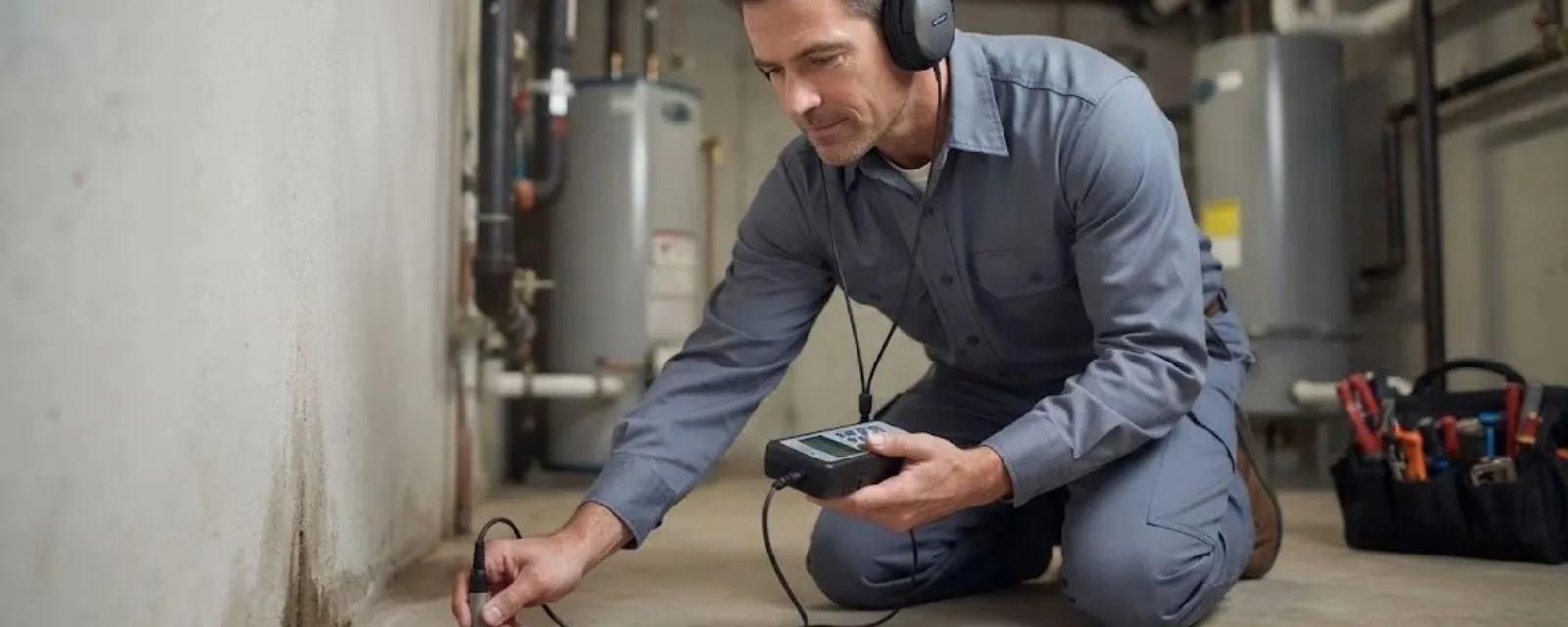
Acoustic listening picks up the sound of pressurized water escaping from a pipe. Thermal imaging shows temperature differences, which reveal hot water lines leaking under floors or cold wet patches in walls. Pressure testing isolates sections of piping to narrow the search. Used together, these tools tell us where to open, and usually the opening is small.
| Tool | Finds | Good for |
|---|---|---|
| Acoustic listener | Sound of escaping water | Pressurized supply leaks |
| Thermal imaging | Temperature changes | Hot lines, wet insulation, radiant areas |
| Pressure test | Which pipe section loses pressure | Narrowing a search |
| Meter test | Whether any water is leaking | High bills and unknown losses |
Water bill climbing and nothing looks wet?
Call and a plumber will run meter and pressure checks to find where the water is going.
Why high water bills happen
Not every high bill means a pipe leak. A running toilet can waste hundreds of gallons a day, irrigation timers drift, and water heater relief valves can weep. Part of our work is ruling out the simple causes. If the toilet, irrigation and fixtures check out, we look at the supply piping and the water heater area, and the plumber reports what was and was not found.
Local housing and leak patterns
Most Happy Valley homes are fairly new and use PEX or CPVC supply lines, so leaks tend to appear at fittings, manifolds or places where a nail or screw penetrated a line during construction or a remodel. Older nearby neighborhoods may have galvanized or copper lines that corrode from the inside. Homes with crawlspaces also face moisture issues that can hide a leak for a long time.
Because Mount Scott and nearby slopes mean street elevation changes, pressure at lower elevations can run high, and a pressure regulator that has failed can stress fittings until one lets go. We test pressure as part of the visit.
Pricing and what happens after the leak is found
The detection visit is priced before it begins, and repair is quoted separately once the source is known. You decide whether to repair, and the plumber explains drying, repair scope and when an insurance claim may be worth considering. We do not handle drywall or mold work, but we can tell you what to ask the next contractor.
What the code and the meter tell you
The Oregon Plumbing Specialty Code (OPSC), based on the Uniform Plumbing Code (UPC), sets pressure and testing expectations for new supply and drain work, and detection uses the same logic. Your water provider's meter is the neutral referee. A moving dial with every fixture off means water is leaking, and the provider can help confirm it.
Leak detection questions
Warning signs include a rising water bill, the sound of running water when everything is off, damp or warm floors, musty smells and a moving meter dial with all fixtures closed.
It is when water is damaging the home or the meter runs fast. Shut off the main valve and call. A very slow leak can usually be scheduled for the next available visit.
Often only a small opening is needed, because the tools narrow down the location first. The plumber explains exactly where and why before cutting.
Yes, using acoustic and pressure testing. The plumber will describe repair options such as rerouting a line to avoid breaking the slab.
Common causes include a running toilet, irrigation, a leak between the meter and the house or a failing water heater valve. A meter test starts the search.
Generally no. Sunrise Water Authority is responsible up to the meter, and the line from the meter to your home is yours. Call us and we will check it.